Showing posts with label help. Show all posts

Thursday, February 23, 2012

Needing

So I haven’t dropped off the face of the earth. Things came up and I was busy and I put it off and... I’m just really sorry that I haven’t posted for a few weeks. I will honestly try and be more regular now.

When you’re a kid- let’s say four or five- if you are lucky enough to have come from a caring, healthy family environment, you are told when to eat. Your parents tell you how much to eat, and when to eat it, and when to play and when to sleep and when to get up.

Once you get a little older, you get more freedom. You get some choice in what you do and wear and yes, what you eat. If you want a biscuit, you don’t have to ask anymore.

When you get even older, all of that responsibility is on you. You make lists, shop, cook, eat, wash up. Rinse and repeat. You set the alarm clock and get up, or wake up when you want to. You are in control of your own life.

Unless you develop an eating disorder, and enter recovery.

You spend a lot of time watching the clock tick by, near to crying (sometimes crying) in frustration because you know you need to eat- and hell, you want to eat- but until somebody says ‘you need to get some food now’, you ‘can’t’.

You don’t know what to buy in a supermarket or how much is okay to spend. You don’t know if people will look and snigger and gossip if you buy a bag of crisps.

You don’t even know when to get up anymore. Getting up is having to deal with breakfast. But getting up is a chance to exercise. But getting up is hard when it doesn’t feel like there’s a point.

Eating disorders take you back to four years old, and they take your voice away at the same time. In recovery especially, you might go back to needing somebody else to do things for you. Needing somebody else to tell you what to eat, when to eat, how to eat it.

It’s a bit like relearning, reverting. And of course, for a lot of people who have never had a healthy relationship with food, it’s just plain learning. Learning to eat what you want in the right amounts, learning to not over or under-eat. It’s erasing the strict rules you set yourself and introducing healthy guidelines.

So yes, you might need somebody to tell you how much to eat. You might need somebody to tell you how much exercise is okay.

In recovery, you might just need more. That is okay.

It can be hard to accept that, I think. To accept that you need treating a little differently to most other people. To accept that it’s not just okay, but necessary.

You might feel like that four year old again (or for the first time). You might feel so dependent and needing- and if up until now you’ve relied on yourself and your own distorted beliefs, that can be hard.

I suppose what I’m trying to say is that in recovery, you are going to need to rely on people. That is okay.

You aren’t always going to have the answers, or know the right thing to do. That is okay.

You are going to need more help. You are going to have to depend on people. Those things are truly, genuinely okay.

Accepting help and guidance doesn’t make you weak. Just because you feel like a child again doesn’t mean that’s what you’ve become. You are still a strong, independent, vibrant, amazing woman or man or girl or boy. Even if you feel so powerless and dependent inside, you are not.

Making the choice to let somebody else help you is one of the bravest things you can do. Don’t let pride or shame get in the way of that.

Jess xx

Saturday, May 21, 2011

A Challenge... of the "me first" variety

(photo credit to: amazon)


I think this week I learned a lesson on life that has been long in the making... a lesson that has left me solidified that time for myself (or myself in general) should be prioritized.

I have this perpetual fear of being viewed as lazy. So I try as hard as I can to be in constant motion. Literally from 7am (sometimes 8am) until about 1am - 2am I am doing something that is non-negotiable. I do try to squeeze an hour power nap in there, but most of my day is spent driving, at school, at work (on my feet), or doing work that resulted from one of the aforementioned things. I try to start my morning with a half hour walk, but lately that's not even been happening.

I should note that I am not doing it for financial reasons, it is purely out of this drive to be constantly going.  Bottom line? This is NOT healthy, especially since it means I work every day of the week.

I was planning on going into work earlier this week and telling them that I needed one day off each week, however, the same day I was set to do that, I spoke to my father on the 15 minute break we take during my Gender Across Culture class -- he told me that that's what it means to be an adult. Making sacrifices, sucking it up, and moving on. You're capable of doing it, so do it. I thought about it... and he was right that I am capable of doing it... I did it in high school (perhaps to a larger degree in fact), so I can do it now...

I didn't broach the topic at work.

But after I emailed my therapist to indefinitely cancel my appointments (I won't even have that nap-time option available to me come June 16th due to an additional three hours of class each day) it dawned on me that what my father told me could very well be wrong.

Being an adult does not mean making sacrifices and sucking it up, though it can involve those things... It does however mean taking care of yourself - be it by yourself or through knowing when to ask for help when you need it (and of course consequently asking for it). Just because you are capable of doing it, doesn't mean you should either. I was capable of doing a similar thing in high school, but should I have? Absolutely not. I wound up taking the living out of my life. That's not okay.

I'm not saying parents are wrong, I am however saying that parents, like anyone else, make mistakes. Like yourself,  they weren't given a manual of life. They don't know everything... they know what they think worked for them. There's the thing though. You are not your parent or guardian. You are, well, you're you.

Just as you are you. I am myself.. and I am my own expert. If my body is telling me something needs to give, I shouldn't allow my mind to be persuaded that I am wrong. That my body is wrong. My body knows what it needs and since it is my body and I am listening to it (truly listening to it) it can be ascertained that it is correct. And it is correct that I need a break... and no that does not mean I am lazy, it means I'm not a superhero.. that I am human. and that is okay.

As a challenge to myself, until I can straighten out this work situation,  I am going to try to incorporate "me" time into my weekly routine on the days I do have some spare time in the morning - those days where I don't have school in the morning, rather just work at night.

I am going to finally finish that green canopy I've been working on off and on. I'm going to take nice rambling walks. I'm going to relax and sit with myself.

I'm going to take a detour from my planned course and put myself first.


as a challenge to yourself, what can you do for yourself this week or each day? How can you make time for you?


(I credit the term "me first" to Kendra from Voice in Recovery)


---------

to continue my random self-discovery q/a :

A picture of my night:


 My Thursday night was spent at Anthropologie working. The above was our last window display -- it's a dress made of paper and dropcloth and of course thousands of clothespins that were individually placed/positioned on molded chicken wire -- the clothespin part has since migrated to the board you see behind the cash/wrap. They're in the process of taking the current one down (a wall made entirely of wine corks as part of the "Anthropologie Goes Green" theme), otherwise I would've put up a pic of that

Monday, May 9, 2011

Relationship Limbo

You fight it. You fight it with everything that you have. The one thing that all eating disorders have in common is the fear of getting close to others. Our disorders fuel it, knowing, as they do, that trust and emotional relationships are exactly the prescription we use to kill them. The disorder dictates that you burry the part of you that seeks affection, that wants to be around people, the part that wants you to be normal. Under these rules, we isolate ourselves to the extreme, to the point where we can’t even imagine any other atmosphere. Yet we crave it. We try, but we find it is impossible to completely cut ourselves off from kindness and humanity.

It is human nature to trust others. It makes sense from a religious viewpoint, but also from one of evolution. Quite simply, trust and companionship offer emotional and physical protection. In an increasingly integrated and complex society, this can be an important tool for survival. The social web that we create as we pass through our lives creates a buffer, or insurance, against the ills that plague us, eating and self-esteem disorders included.

So what now then? What do we do when we have an illness pushing us to isolate ourselves from one end and a craving for intimate relationships pushing from the other? We are stuck in a seeming limbo, often oscillating between the two extremes, sometimes minute to minute.

Naturally, we will not seek out relationships. In fact, we often run from them. At least I do. But what happens when someone sneaks in? What happens when someone gets past your defences without you knowing, and suddenly, you are exposed? That very thing happened to me recently. It wasn’t the usual suspect, not a family member or friend, but instead my dietician. What terrified me was when I realised she cared about me. I wasn’t expecting that, to say the least. But it occurred to me one day that she genuinely cares and genuinely believes I can get completely well and live a long and successful life.

Why does this scare me?

She is not an intimidating woman, but rather compassionate. She is intelligent, and is able to argue against my disorder better than I. Maybe that in itself makes her intimidating, I’m not sure. She created and then snuck through cracks in my defence system, and I didn’t realise it until she was already in. It scares me because I’m finding myself trusting her. That means her opinion has merit in the decisions that I make daily.

What does this mean?

It means my life is changing. There is a change, albeit small at the moment, in how I think about my life and the choices I will make. It means that I see myself s-l-o-w-l-y moving away from my eating disorder. That is terrifying. But at the same time, it seems.....right?

Tuesday, March 29, 2011

Connection Is Key!....

Yay, I’m back again and this time I’m filling in for the foreseeable future on Tuesdays. I’m so happy. Being a part of this blog is such an honour.

So today I want to talk about staying connected and why this is key to recovery. Eating disorders are by far one of the most isolating illnesses out there. They keep you trapped inside their dangerous walls, afraid, unreachable, angry & untouchable…

I’ve been there. I didn’t want anyone knowing what was going on in my life, interfering and asking me questions. I also couldn’t face the world because I felt like it was against me. That I didn’t fit in, that others would judge me. But one of the most freeing realisations I had recently was “It’s not all about me”…. I also had to learn & accept that support is out there and I need and deserve it.

Since embarking on my own road to recovery, I have met many, many wonderful people and am now blessed to say I have an amazing support network. This is made up of those I have met online, a few select friends, my care team, my therapist & my family, especially my wonderful Mum who has been my rock. I am truly blessed..

The truth is, you cannot do this alone. You may try, but with your eating disorder as your only ally, you’re fighting a losing battle. Trust me, I tried. But, this doesn’t have to be the way. You & only you can change this.

Once you’ve made that courageous decision to recover however, it can be unbelievably difficult to first seek & then ask for support. Many relationships may have been lost or damaged but the ones that mattered before will always be there. It’s about finding those that you trust, feel comfortable & safe with & simply asking for their support. Trust me, it will be there. And if it’s not, find it…

The road to recovery is indeed a very bumpy one and there will be many, many times when you will need to reach out and ask for help. And there is no shame in doing so either. That’s another thing eating disorders tend to do- Make one feel ashamed or weak for needing help. Everyone in life at times needs help, no matter what age they are. It actually shows true strength to ask for it. Whether that be in person, via text, email whatever! Thanks to technology, there is never a need to be alone.

Keeping connected at all times is crucial. Whether it is because you are having a bad day, you’re struggling with a meal, your mind is racing or you simply just want to talk.

Sometimes it can feel as if your eating disorder is stronger than you and at times it can be. But, with support behind you, those who will help you back up if you fall, cry with you, laugh with you, fight with you, you can do it. You are not the exception. United you are stronger than ever before.

Reach out. Don’t be afraid. Free yourself from isolation.

Below are some links to some of the websites that are the backbone to my support system. I have been given some of the best help & advice throughout my journey & have met some truly amazing people. Without these connections along with others, I don’t think I’d be where I am today. *

At times staying connected can save your life. Hold out your hand, Speak up & be heard.

With Much Love, Smiles & Support,

Hanna x

* Please don’t forget that whilst online support is fantastic & beneficial, it cannot replace actual physical & medical support too. Build up a team….

http://www.webiteback.com

http://www.mentorconnect-ed.org/

http://lifebeyonded.ning.com/

http://www.b-eat.co.uk/Home


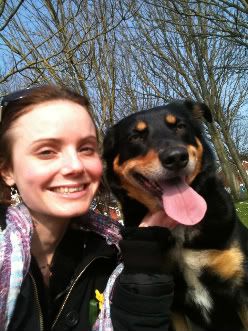
My Furry Support :o)

Thursday, March 17, 2011

You Never Asked

You never asked...
...for a hug
...for me to call
...to spend time together
...for me to drive instead of you


...So how do you expect to get it?


A lot has been going on with me for the past week. I've exhausted myself from multiple committments, plus my boyfriend is home from graduate school for Spring Break. Add in to the mix some relationship squabbles, identity crises, and a best friend ending up in the ER for 10+ hours, and you have a very tired Ashley in need of rest.

Most likely related to what's been going on, the other day I had a migraine, and felt like I was going to get sick. So, I spent most of the day in bed and skipped my class. My boyfriend came upstairs to check on me around 5:30 PM (yes, I was still in bed!) and asked if I needed anything. It hit me: I was CRAVING an iced mocha! I sheepishly asked him if he would drive to a coffee shop and grab one for me.


He paused (ahhh!!, I think) and said, "Yep."

With wide eyes, I said, "Really? You'll get me one?"

"Yes, I will."

 "I excepted you to say no for some reason..."

"You've never asked before."


The iced mocha was delicious, by the way.

Thursday, March 3, 2011

Letting Yourself Be Helped

  • You're upset, so you hold it in rather than talking about it.
  • You've returned from the store with a bunch of groceries and lug them all in by yourself. 
  • You feel as if though you do everything, that you have to do everything, because others won't do whatever it is correctly. 
  • You frequently take control of group projects at work or school.
  •  You push yourself to beyond exhausted to get everything that you need to get done.
  • When someone asks you what is wrong, you reply with a vague answer like "nothing," or "I'm fine."
  • You often view people who challenge your eating disorder as enemies rather than allies (i.e., you get upset or bothered by their comments or concerns)
  • You don't actively reach for help or support from other people that care about you or a therapist (e.g., calling someone when upset or when struggling with eating disorder) 
How many of these can you relate to? And how many more ways can you think of that you push away the help of others? Many of us withdrew into the solitude and secrecy of the eating disorder when we first became ill. Isolating yourself allows you to continue the eating disorder--by not eating around us and become independent as possible from the "outside" or normal day lives of those who eat regularly, you seal yourself off from the possibility of becoming better.

So when you're starting to recover, there's often a painful period of reintegration into the world of people and food. All the sudden you are learning to eat again and trying to cope with the emotions and energy that recovery unearths. This is where you hit the uncomfortable middle ground that Kat so eloquently spoke about--the beginning of recovery can sometimes feel WORSE than the eating disorder did. Your first instinct is probably to go straight back to the eating disorder, to go straight back to that "independence" and secrecy that allowed you to continue being sick. 

But stop. You don't have to do this. Recovery involves the process of learning new skills and new ways of dealing with your emotions and interacting with the people around you. When you first start consciously reaching out to others for help, it may be hard, it may hurt, it may be surprising or nerve-wracking and it may feel like you'll be torn apart by guilt. We often suffer from fears that we are inadequate, unworthy of being helped, or a waste of time, in much less obvious terms. Our world-view becomes distorted and it becomes normal to think that just like doing the whole eating disorder thing alone, we have to do the whole recovery thing alone. It's not true.

A little over the month ago, I walked into the office of my previous therapist. I hadn't seen her in about a year and a half, and had no contact with her over that time. I had first been seeing her post-hospital stay, but left after a few months when I started floundering again [and given I was returning to the same home environment from which I had first gotten sick, it wasn't surprising. That, however, is a post for another day]. I deliberated for days on end whether or not I could call her, what she would think about me for calling. I was waiting in the reception area for her to come out, since she had said her old office had moved.

When she came out, she saw me and had a huge smile on her face. "C'mon in, she said." I had prepped myself in the car on the way over the her office. I promised myself that no matter what happened, I would let her in, be honest with her, and genuinely accept any help she had to offer. I was desperate to change. By the time I left, she had told me, "I had no idea what to expect when you walked in. I was driving over here earlier and I really didn't know how you would be...what had changed...and I was just so relieved once we started talking." Granted I've changed a lot since I'd last seen her, I think it was my attitude of wanting help that struck her the most as changed. I hadn't asked for help so directly before; I had mostly sat in her office and felt sorry for myself (all along having this great resource of a person to draw from). 

As I've gone through the recovery process, I've gradually learned how to let people in. I opened the door into my mind and feelings just a peep at first, and often slammed it shut at the first sign of fear or rejection. But bit by bit I learned how to inch it open further, sometimes far enough to let a whole person in rather than speaking to them through the door crack. 

Through doing so, it's become easier to ask for help. I let my boyfriend carry thing for me. It doesn't mean I'm weak; it means I am strong enough to ask for help. I tell someone close to me when I am sad or upset so that they can help me through the emotion. It doesn't mean I am an emotional wreck; it means I am learning to be open enough to share what is really going on inside of me. When it's time to do a group project, I use my leadership skills to delegate out tasks to other people as fairly and equally as possible. It doesn't mean I can't do the project; it means that I recognize that I could benefit from the input of others. 

When I got out of that appointment with my therapist, I texted a friend and said, "I let myself be helped." 
He quickly replied back, "I'm proud of you."

Look over that list again, and try to think about any other things you do that might benefit from recieving other people's help. You don't have to go at this whole recovery thing alone, you know. We bloggers are here, we know what it's like, and you certainly have people in your own life who are probably waiting to help you. But you can't know that until you let them in.


Related Posts Plugin for WordPress, Blogger...